With darkness lasting longer than light here in the western US, I am reminded that spring is quickly unfurling in the southern hemisphere. One of the strangest experiences is to leave the northern hemisphere in the dead of winter, to arrive in the southern hemisphere at the height of summer. Leaving a place that holds 8 hours of sunlight, and arriving in a different place with 16 hours of sunlight is certainly an experience that will leave the body somewhat confused.
New Zealand is a country blessed with amazing beauty. Most of the country has been converted from ancient native forest, to various types of grazing land and timber land to support the commercial interests of land holders. Of course, the most beautiful and mysterious places in New Zealand lie within the protected confines of national parks.
One such place called Te Urewera National Park allows a visitor to witness ancient New Zealand nature as it mostly once was.
Lake Waikaremoana
It is rare to see water clarity as great as what I experienced while camping on the shore of Lake Waikaremoana. The lake is huge, the deepest on the North Island, and completely natural (no dam). The forest and vegetation around the lake are native, allowing one to sense the pristine state of nature from the days of old.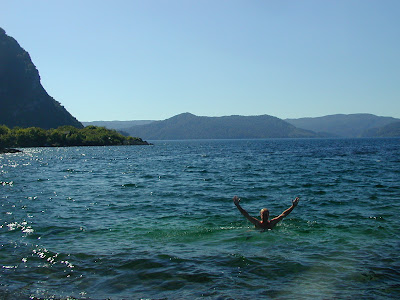
A hike through the local forests will provide incredible views of the native Kauri trees that once dominated the New Zealand countryside. A slow growing hardwood, the Kauri have long been a prized wood for building. Unfortunately very few kauri forests are left due to the over logging and consumption by invasive non-native possums.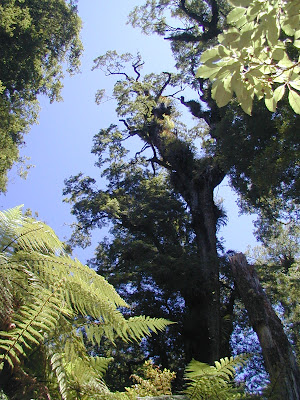
Kauri Tree
Wednesday, November 7, 2007
Lake Waikaremoana

Saturday, October 6, 2007
Earth Sculptures
The warm, red heart of western North America contains a land with an unexpected and strangely beautiful landscape. The shapes and geomorphic forms found here tell the story of an ancient earth, where dinosaurs and shallow seas once dwelled. Arches National Park is located north of the town of Moab Utah, and just east of Canyonlands National Park. A visit to Arches National Park will reveal the massive sandstone formations that have eroded over the millenia from the simple process weather. An arch is a feature that forms by the action of weather as opposed to a natural bridge which is formed from the erosional process of rivers, streams, lakes and oceans.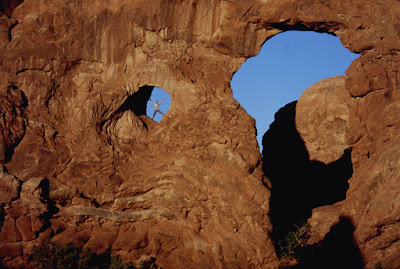
In the Eye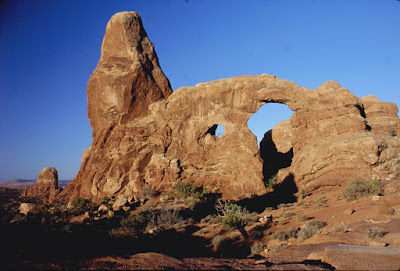
Perspective
Friday, October 5, 2007
Wizard Pool
Deep in the Desert Wilderness of Death Valley National Park lies a very remote and beautiful valley surrounded by towering mountains and rocky escarpments. Saline Valley seems cut off from civilization like very few places on earth. In the days of man over nature, mining of all sorts was the interest of this area of California. The old mining roads are still used to access the area. The nearest civilization of any sort is located about 85 miles at the town of Lone Pine California. In the north east corner of Saline Valley lies one of nature's rare gems, a hot spring.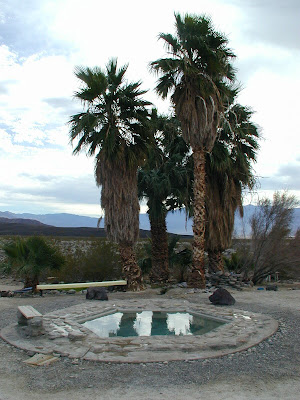
Wizard Pool
There are several tubs at this extremely primitive Park campground. Although you must be forewarned, as with any primitive hot spring area, the tubs may contain outdoorsy folk in their most natural form. A great retreat far from the constraints and stresses of modern life. The stars shimmer a little brighter out here....

